
Meet Literary Agent Aashna Avachat
- Chelsea Tornetto
- Jan 19
- 5 min read

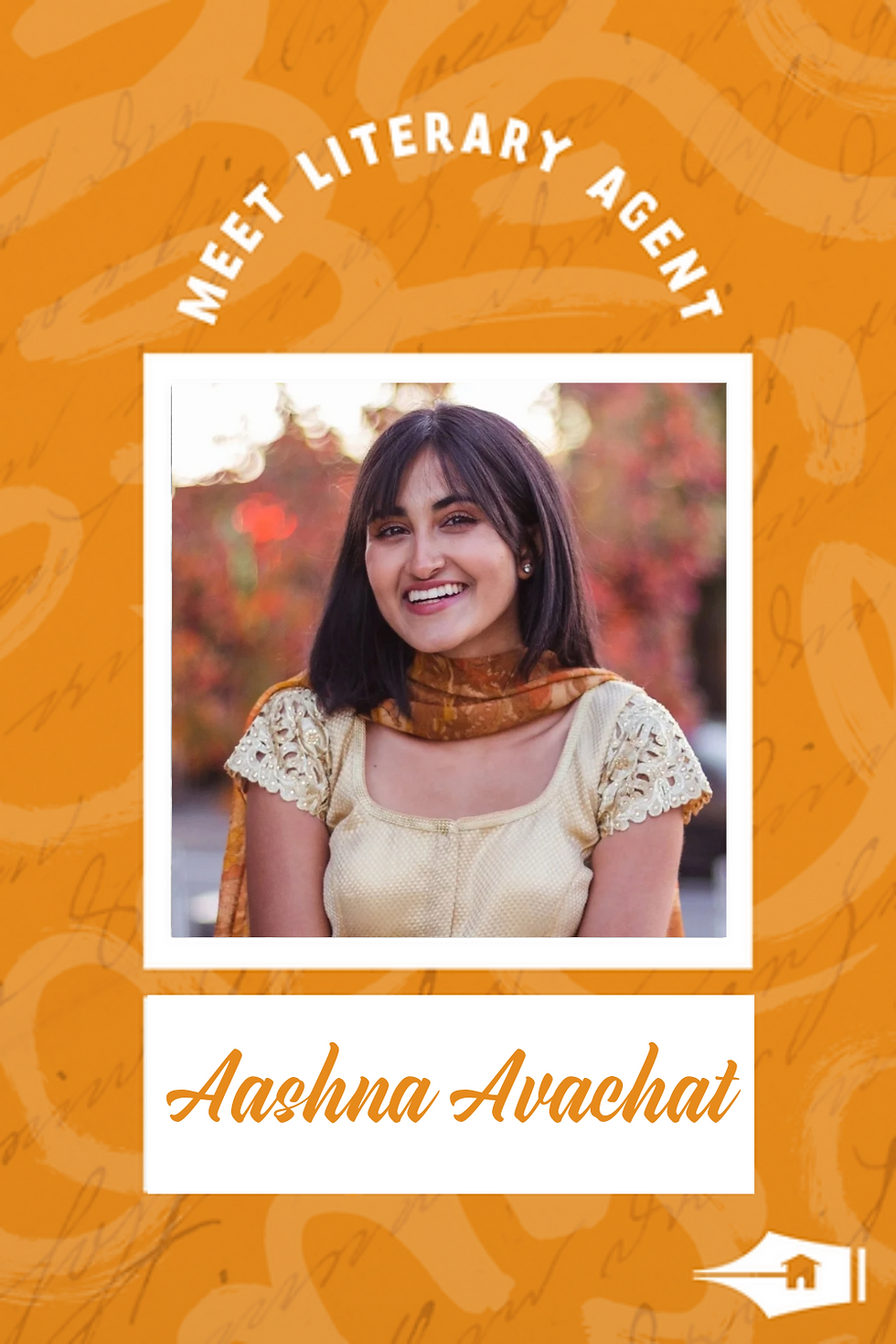
We are so excited to connect with Aashna Avachat, a literary agent at Neighborhood Literary, to chat about the world of publishing, and what advice she has for authors in the querying trenches!
Meet Aashna Avachat
Aashna Avachat is an author, lawyer, and literary agent. She's passionate about uplifting marginalized voices in publishing and supporting creators of color. When she’s not writing, she’s probably reading on a sunny patch of grass, going on long walks to grocery stores, or being cozy with one of her many foster cats.
She is an author of YA books and was previously an assistant at Andrea Brown Literary Agency for over three years. She is currently building a list focused on authors of color and is looking for kidlit, commercial adult fiction, select non-fiction, and illustrators.
Aashna sat down with At Home Author to share her advice for writers starting their querying journey, from making your manuscript stand out to navigating those inevitable rejections.
Make sure you read all the way to the end for information on Aashna's manuscript wish list and how to query her!
How did you get started in publishing, and what led you to become a literary agent?
Aashna: I got started after applying for a mentorship opportunity I saw for people interested in agenting—on Book Twitter, of all places! When I graduated college as an English major, I got connected with lots of industry folks (writers, editors, agents) through the platform. I saw an agent, Carly Watters, was running a series of webinars about agenting and signed up, and then I started applying for internships at agencies.
I ended up deciding on agenting because I like the independence of the work and the chance to advocate for authors over the course of their careers! After interning, I became an assistant at Andrea Brown Literary Agency, and this year, I joined Neighborhood Agency as an agent. It feels very full circle because the founder, Eric Smith, was one of the first agents I had interned for.
What does a typical day in your role look like?
Aashna: Usually, I'm doing a lot of reading and taking notes! Typically, I'm reading manuscripts that my clients are working on and writing editorial notes for their revision process and am always in communication with them. I also have meetings with editors so I can figure out the best fit for submission lists for my clients, and I spend time reviewing contracts and pitching books to imprints. As a newer agent, I also spend a lot of time reading queries and considering new submissions!
What do you wish more authors knew?
Aashna: One of the tough things about this industry is how opaque much of the process is for authors to find agents and get published. I so appreciate the writers and agents who have created really in-depth online resources for learning more about querying and submitting. I always recommend that writers interested in traditional publishing spend time with these resources before querying; it will make your queries—and your books—stronger!
What makes a manuscript or query stand out to you?
Aashna: For me, a strong pitch in the query is key!
👉The conflict (what the main character wants),
👉the obstacles (what's getting in the way),
👉and the stakes (what happens if the characters don't get what they want)
makes all the difference! Seeing how authors can successfully distill their books into short pitches is helpful to catching my attention.
Are there any themes, genres, or trends you’re especially drawn to—or tired of seeing?
Aashna: Lately, I've really been loving horror that touches on sociopolitical themes, and I'm always looking for mysteries/thrillers that don't portray policing and prisons as a solution! On the young reader side, I have noticed that the market is moving away from picture books that introduce culture through food, so I think those are a tougher sell!
What are the most common mistakes you see in queries?
Aashna: Mostly submitting works that the agent isn't looking for. I really recommend comparing your work to an agent's Manuscript Wish List (MSWL) to see if they're even looking for the genre you're writing in! For example, I'm not looking for much sci-fi or fantasy (with very limited exceptions), but I do get a lot of those submissions anyway.
How do you like to see comp titles used?
Aashna: The best comp titles are current (published in the last couple years) books that relate in theme or genre to your book. I often see authors say that they can't find any, but trust me, there always are if you research your genre niche even more—or get creative with how your pitch things—like by finding one comp title that fits your genre and another that fits your theme.
How important is a strong concept, compared to the execution of the manuscript?
Aashna: A strong concept doesn't mean anything if the execution isn't there! Of course, a strong concept is important, but just as important, if not more so, is the finished product. I always ask for a synopsis and full manuscript if I'm interested in the query, and how I feel reading the rest of the book is what decides whether I want to offer!
What’s your best piece of advice for writers just starting their querying journey?
Aashna: Find online resources to help you learn how to write a query and select agents and learn more about the industry lingo—Jane Friedman and Ann Zhao both have great resources. Lots of writers also do "How I got my Agent" posts that can be helpful—though of course, everyone's journey looks different! And get connected to other writers who are also querying; it helps to be part of a community.
Publishing involves a lot of rejection—what’s your advice for handling it and staying motivated?
Aashna: I always tell my clients that at the end of the day, all that matters is one yes. No matter how many no's you get, the right yes is the goal, so that's what we focus on to stay motivated! Also, agents and editors reject books for a variety of reasons, many of them very subjective, and often, the rejections don't come with feedback. So, though it's easier said than done, don't take rejections too personally!
My other recommendation to writers is to find a trusted critique group that you can go to for feedback, and new eyes from beta readers when you feel in a rut. Rejections might not tell you how to move forward or what to change, but your trusted readers can. And, overall, keep reading, and keep writing; this is a craft that can always be learned and improved, so keep trying! (And read lots in the category you're hoping to be published in!)
Want to query Aashna?
You can find more about Aashna and Neighborhood Literary at:
Aashna's Website: aashnaavachat.com
Neighborhood Literary: neighborhoodliterary.com
Instagram: Neighborhood Literary
Aashna's Manuscript Wish List: https://www.manuscriptwishlist.com/mswl-post/aashna-avachat/
And if you're still looking for that author community Aashna mentioned, consider joining our Profitable Picture Books Program! It's a comprehensive course that walks you through both traditional and self-publishing, and connects you with hundreds of authors who can support you on your journey.


Comments