
Meet Adam Wallace: Author of the "How To Catch" Books


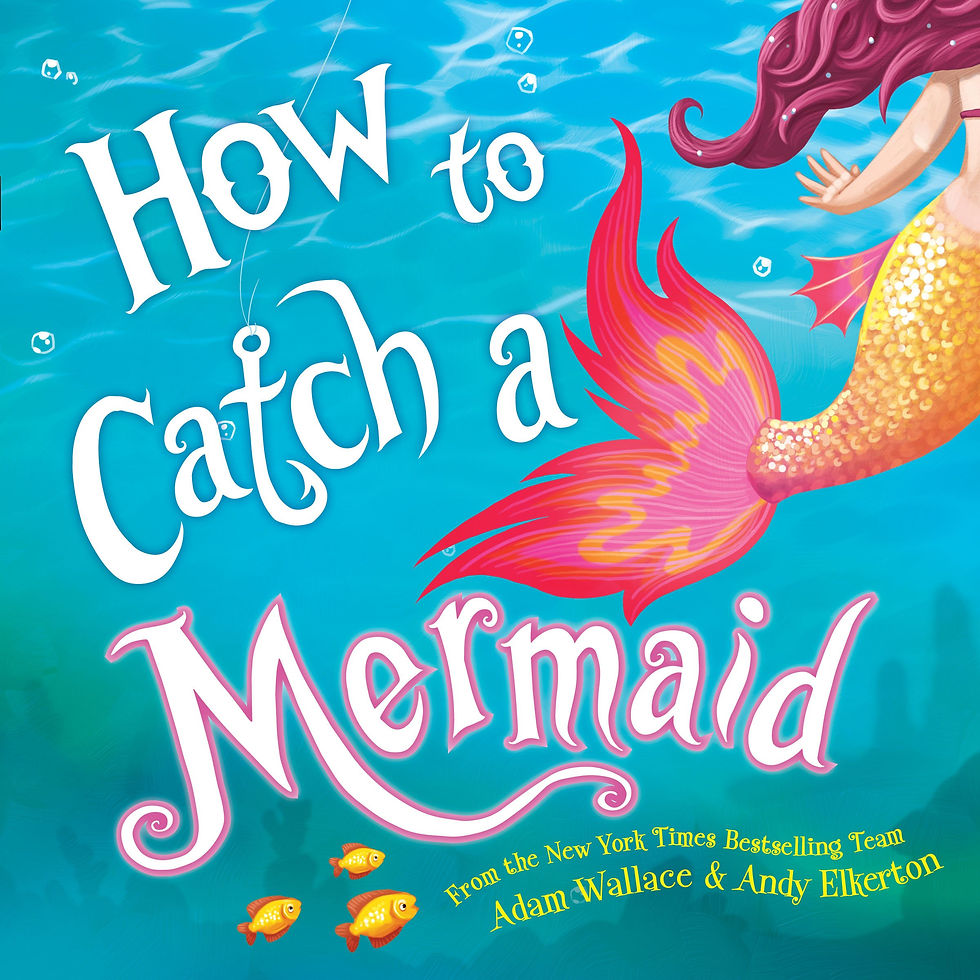
It is always a treat to chat with someone who truly understands the magic of getting kids excited about reading. Adam Wallace is a powerhouse in the world of children's literature, known for his wildly successful How to Catch series. His ability to blend humor, heart, and a bit of chaos has made him a staple on bookshelves worldwide.
In this interview, we peel back the curtain on his creative process, his journey to becoming a New York Times bestselling author, and why he believes you should always, "write it anyway."
Adam: Oh wow, that was back in 2016 now, How to Catch a Leprechaun. My writing has grown year on year, and probably the biggest thing I have learnt is to trust my instinct, especially on a first draft, and just write it out. The editing and tightening comes after for me, rather than editing every single line as I go. The other main thing is leaving space for illustrations. Andy did such an incredible job on the How to Catch books in adding in so much, that it made me realise I don't have to write it all out. Leave space for the illustrator to work their magic and interpret.

AHA: With a successful series that follows a recognizable structure, how do you keep each book feeling fresh instead of formulaic?
Adam: Oh I love the formulas haha! I am a bit of a math nerd, but also having that formula is like having the lines on a basketball court. The restrictions give you freedom, so the fun is then, well, how am I going to score? With these books, the fun was knowing I had a few pages of introducing the character and situation, then I could let loose on the traps, from small escalating to bigger. And I got to research the characters, which meant I could search for things like "True facts about the easter Bunny!" haha!
AHA: Picture books demand tight word counts, strong page turns, and (in your case) rhythmic rhyme. What do you think is the hardest part of writing a picture book?
Adam: The hardest part for me is ALWAYS the word count. I tend to waffle and get excited about every idea that pops into my head as I write, meaning I often end up with a first draft hovering around the 800 words mark rather than under 500, which is what is wanted most of the time with books like these. Again, this is where the formula really helps, having that structure FORCES me to write tight, so I tend to try and work out a formula or structure for most series (after the first book, which will require whittling down the massive first draft!). In saying that, I find it is definitely easier to take an 800 word draft and tighten it to 500 words rather than trying to add in ideas to a thin draft. I love to let ALL the ideas flow out, then go through and find the absolute best ones.
AHA: Have you ever struggled with writer's block? What advice would you give to someone who is?
Adam: I have never really struggled with writer's block, as such. I have had times where I wondered if I could actually write things people would read, but always had the ideas. This is why I tend to believe there is no such thing as writer's block, it is more writer's doubt ... but I will be talking about this in the session so will stop now haha! Basically, writer's block is the idea that we don't have a clue as to what to write next, or can't think of an idea to write about. I don't think that's true. I just think we doubt whether the idea we have is good enough. So if that's the case, the advice I would give is this. WRITE IT ANYWAY. And play with it, treat it as practice, not that you are writing something that has to be published. And act as if you are writing THE worst idea ever, laugh at how bad it is ... then read it back. You just mind find there are some snippets of gold in there.
AHA: How do you know when you're revising to strengthen a manuscript versus revising the fun right out of it?
Adam: Ohhhhhh, this is a tricky one. Overworking something is definitely a problem many of us have, and it's hard to let it go. I still read finished products and find little bits I would change! But there has to come a point where you realise you are changing things for the sake of changing them. One quote that helped me massively was in The Artist's Way, and I have no idea who said it, but it was along the lines of, "A good painting is never finished. It just stops in interesting places." I love that! Sometimes we have to just let it go.
AHA: When starting a new project, what usually comes first for you: the hook, the concept, the rhyme, or something else?
Adam: First for me is most often ... actually it really varies! With picture books, it is quite often a title/concept, which are often the same thing. In saying that though, other times it is the concept. It's a bit like ideas, they come from everywhere an anywhere. But I would say mostly with longer stories, it's the character and the ending, or a major turning point. With picture books, it's more often the title/concept. I just wrote one that ... nope, that's for the next question!
AHA: What upcoming projects are you most excited about right now—and are you exploring anything that might surprise your readers?
Adam: Ooooooooh, I love this! So the book I have just written that excites me, and is currently being looked at by a publisher, is called The Tall Puppy. This came about in a conversation with a friend in America, who asked about differences between Australia and America. I was talking about tall poppy syndrome, which we have here, where if someone is doing really well, often others try and cut them down. She looked at me in horror. "You cut puppies down???" She thought I said Tall PUPPY syndrome hahaha! So I would love to see that in the world, as I really like the story that both came out of that conversation, and also the story of how the book came about. Aside from that, Hatman is still my baby that I am talking about in schools here, and the surprising one may be that I am working on movie screenplays, as I would LOOOOVE to break into that world!
Wrap Up
It’s rare to find an author who balances the business of publishing with such an infectious, joy for the craft. Adam’s insights serve as a great reminder that storytelling isn’t just about following a formula—it’s about connecting with your audience and, most importantly, having a blast while doing it. A huge thank you to Adam Wallace for sharing his time and his wisdom with us. We can't wait to see what he "catches" next!
Learn From Adam Wallace!
Want to learn directly from Adam? Join At Home Author on July 23rd for a private webinar with Adam called, "Making Writing Fun Again!"

Remember when writing was play? When it was just the joy of putting words on a page and creating magic? Well, it doesn't have to stop. Join Adam in a session where you will be given permission to play again, and when you do that, when you allow yourself to make mistakes and have fun, your writing will improve more than you will believe.
Can't make it live? All who register will get the recording! Sign up now!


Comments